A firefly is actually a beetle.
Those little lights in the evening belong to a family of beetles—and the glow is chemistry at work.
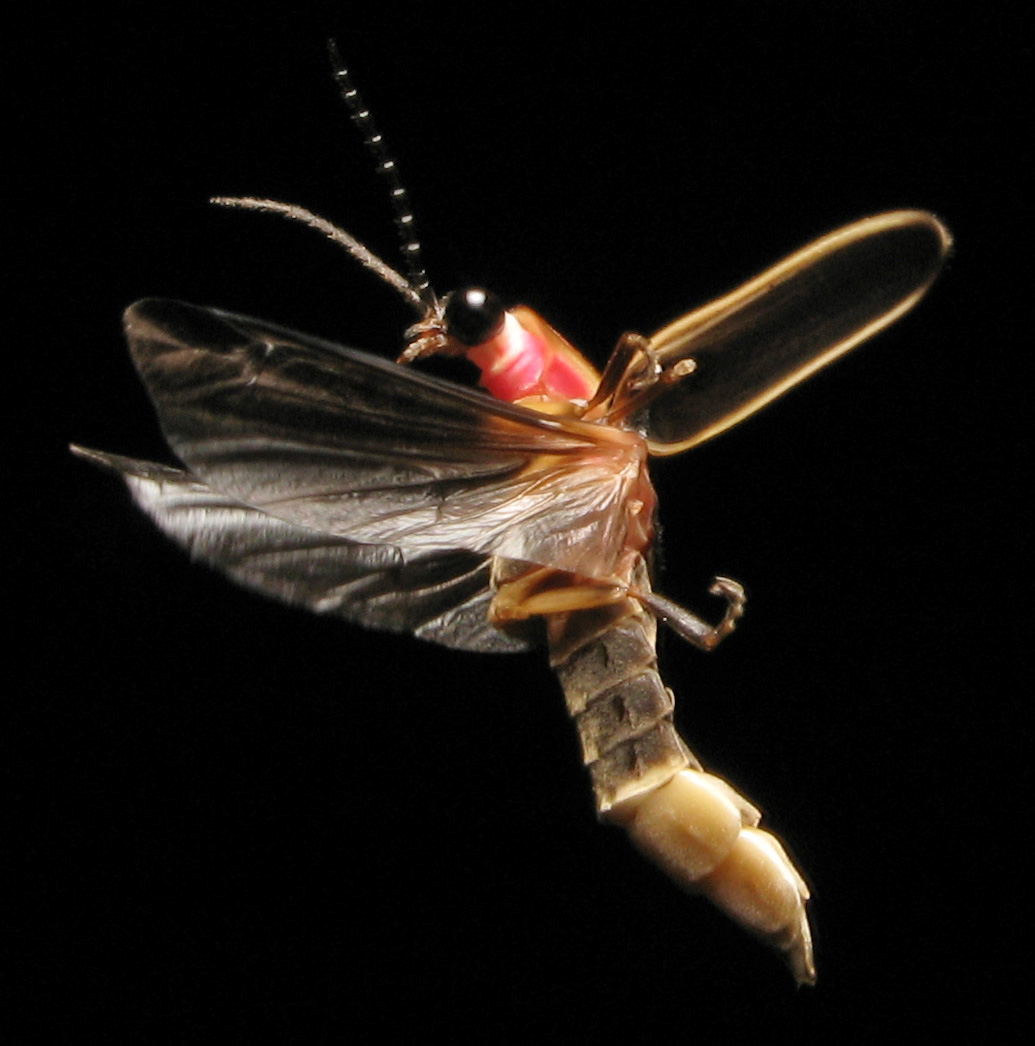
art farmer / Wikimedia Commons · CC BY-SA 2.0. Responsive display may crop the image.
The name gives us a little puzzle: a firefly is a beetle in the family Lampyridae. “Lightning bug” is another name for the same kind of insect.
A light made by a living thing
The glow is called bioluminescence. Smithsonian Ocean explains that fireflies make light through a chemical reaction in their abdomens. Similar light-making abilities turn up in ocean life too, including some squid and tiny crustaceans.
For fireflies, the light-making part of the abdomen is wonderfully named the lantern. The National Park Service describes a reaction involving luciferin, an enzyme called luciferase, oxygen and other ingredients.
The flashes can be messages
Many fireflies use light to find and communicate with a mate. Some species glow steadily; some blink. Some do not produce light at all.
At Congaree National Park, one species, Photuris frontalis, is known for flashing together. That does not mean every firefly in every garden is part of a synchronized show.
Can you think of another animal whose name might trick you about what it is?
Share something you learned ↗Keep exploring
Sources checked October 16, 2026. Publication dates refer to our articles, not when the facts were discovered.